Nothing Tech
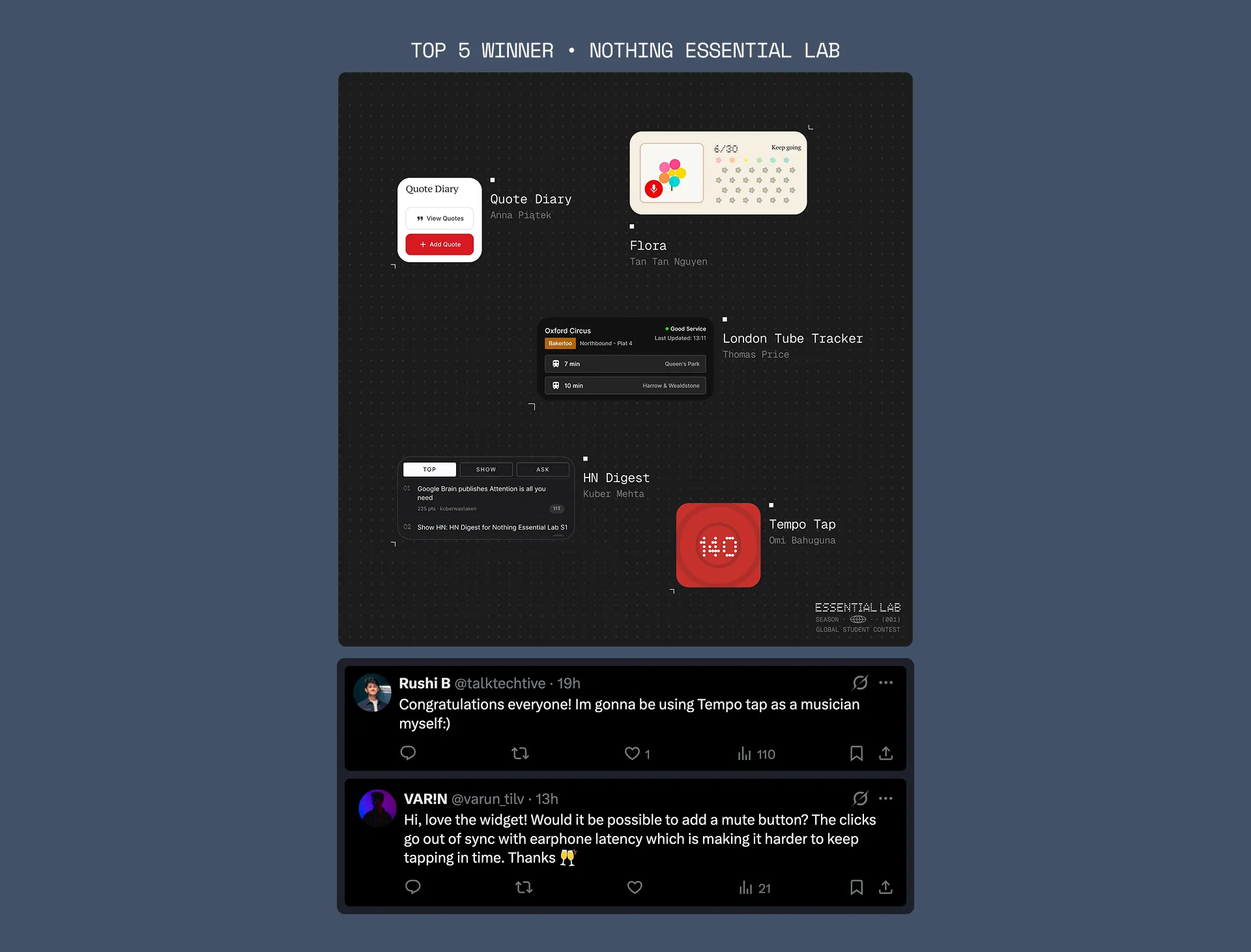
Nothing invited students from all over the world to build a small, personal "essential" app designed for specific moments, tasks, or decisions a given day. We had 24 hours and access to Nothing's app-builder. The emphasis was on building something simple, specific, and clear. I made an app called Tempo Tap, which was a Top 5 winner amongst thousands of entries.
I am drawn to a reality where software adapts to people, not the other way around. It is exciting to see so a community of people building their own tools shaped by their unique contexts. I am curious to see the implications of this reality.
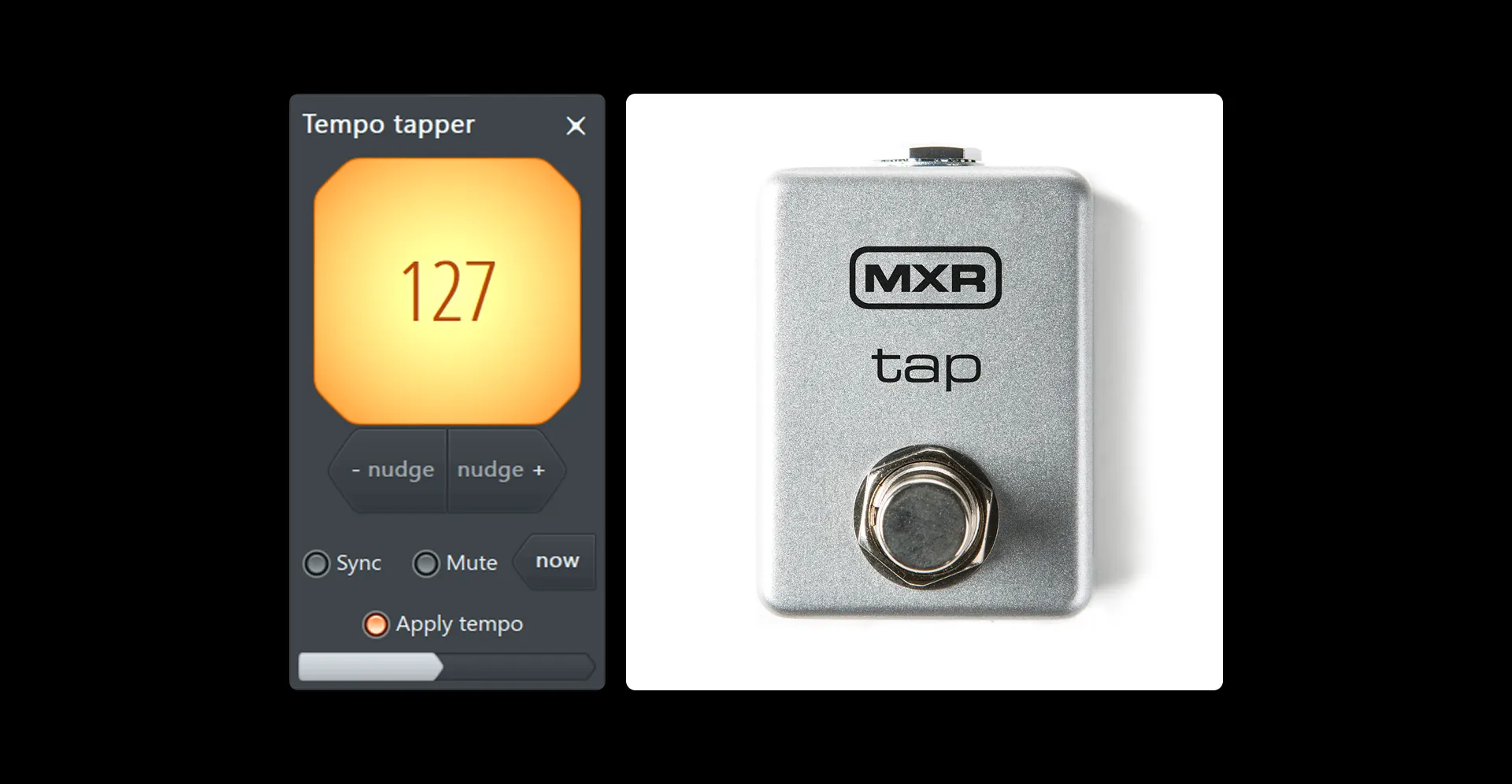
A tempo tapper is a tool that lives within many DAWs, app stores, and websites. It calculates the BPM by measuring the average time between taps or clicks. This allows musicians/producers to explore ideas or set the tempo for their projects by tapping along to a sample or a melody, or a freestyle. There is also hardware — pedals — for guitarists that operate with similar mechanics, allowing them to sync effects to a tempo they set.
In New York City, music and inspiration are always around the corner. I wanted this tool out in the wild, for the moments I find myself tapping along to the city's rhythms. Tempo Tap lets you stay in the groove, so you can take back that moment into the studio.
I like this interaction because it amplifies our natural instinct to tap or nod along to good music, and channels it into creative exploration.
I brainstormed a few ideas, thinking about moments a small, single-purpose, glanceable widget would be useful. I even built a few of them on Nothing's app-builder.
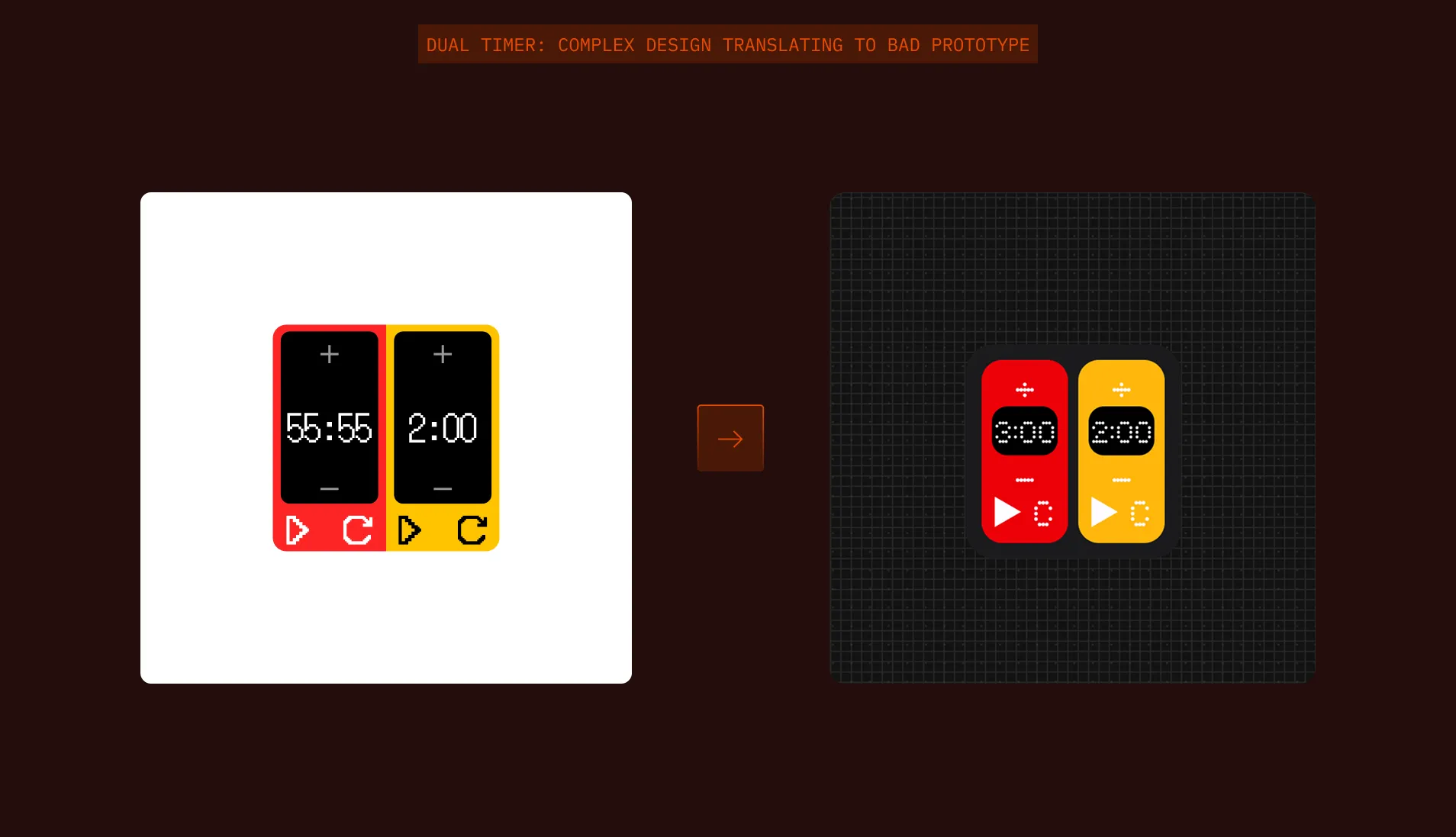
My first idea was a nutrition log — too complex for an app that would show up as a widget. I reframed my ideation around the dimensions of 2x2 widget.
I sketched several ideas on Figma, and used those visual references and states to steer the interaction on the app builder — which only took design references well only when they were simple.
Ultimately, Tempo Tap was the app I landed on.
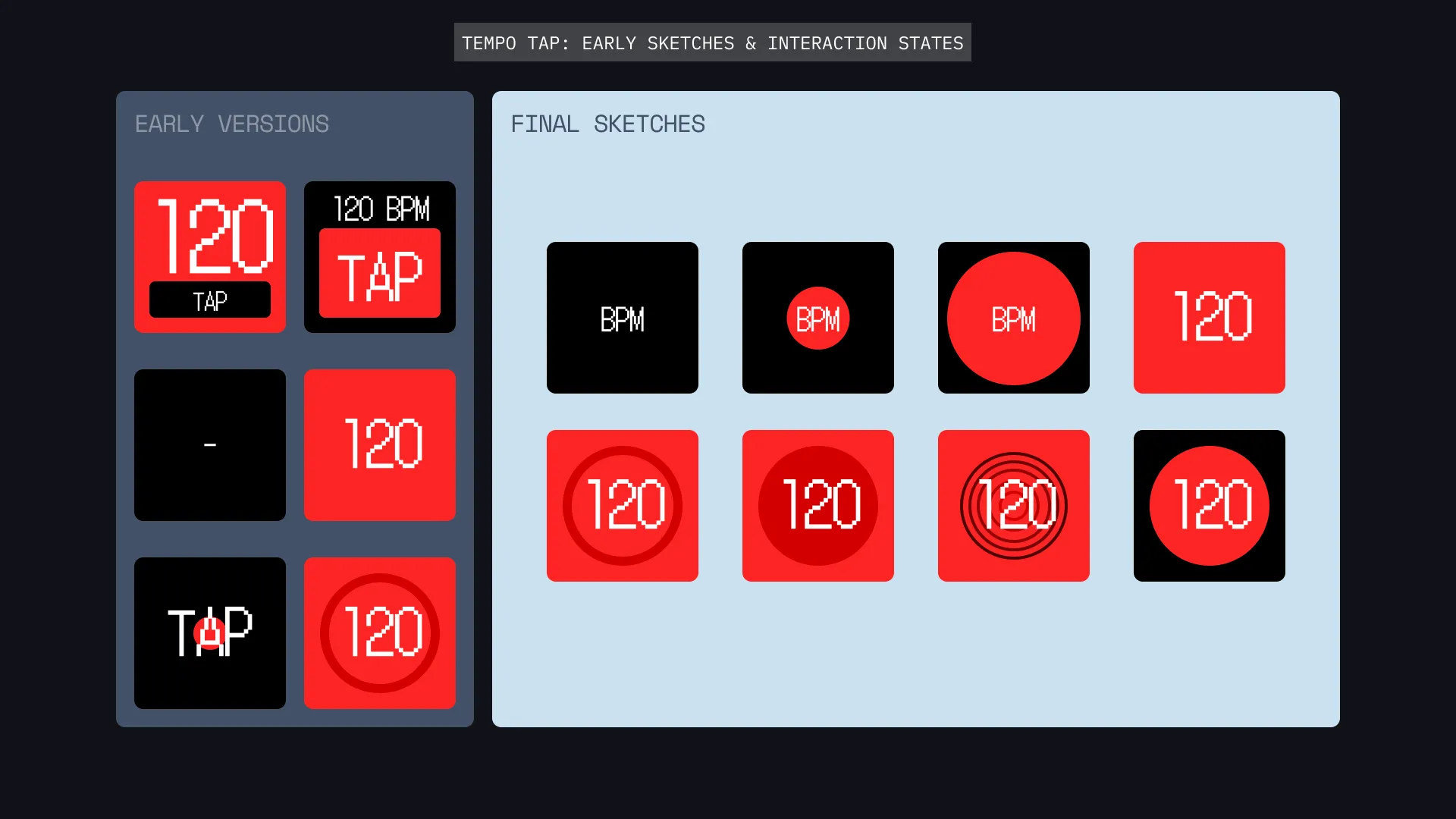
Once I finalized Tempo Tap, I spent a lot of time refining the interaction. What does the widget look like when you tap for the first and last time? What animation visualizes rhythm without screaming for attention? What auditory cue pairs well with it?
The final widget strips it down to the essentials — a large BPM readout and a tap target with a soothing metronome sound.
Users responded positively, though one noted that audio latency of the metronome occasionally interfered with the taps, suggesting there's still room to make the interaction even more immediate and responsive.