Climate Film Festival
Climate Film Festival (CFF) is a New York City-based cultural organization rewriting the narrative on climate change through cinema. Founded in 2023, it brings together filmmakers, artists, students, experts, and audiences to inspire collective action towards a sustainable future.
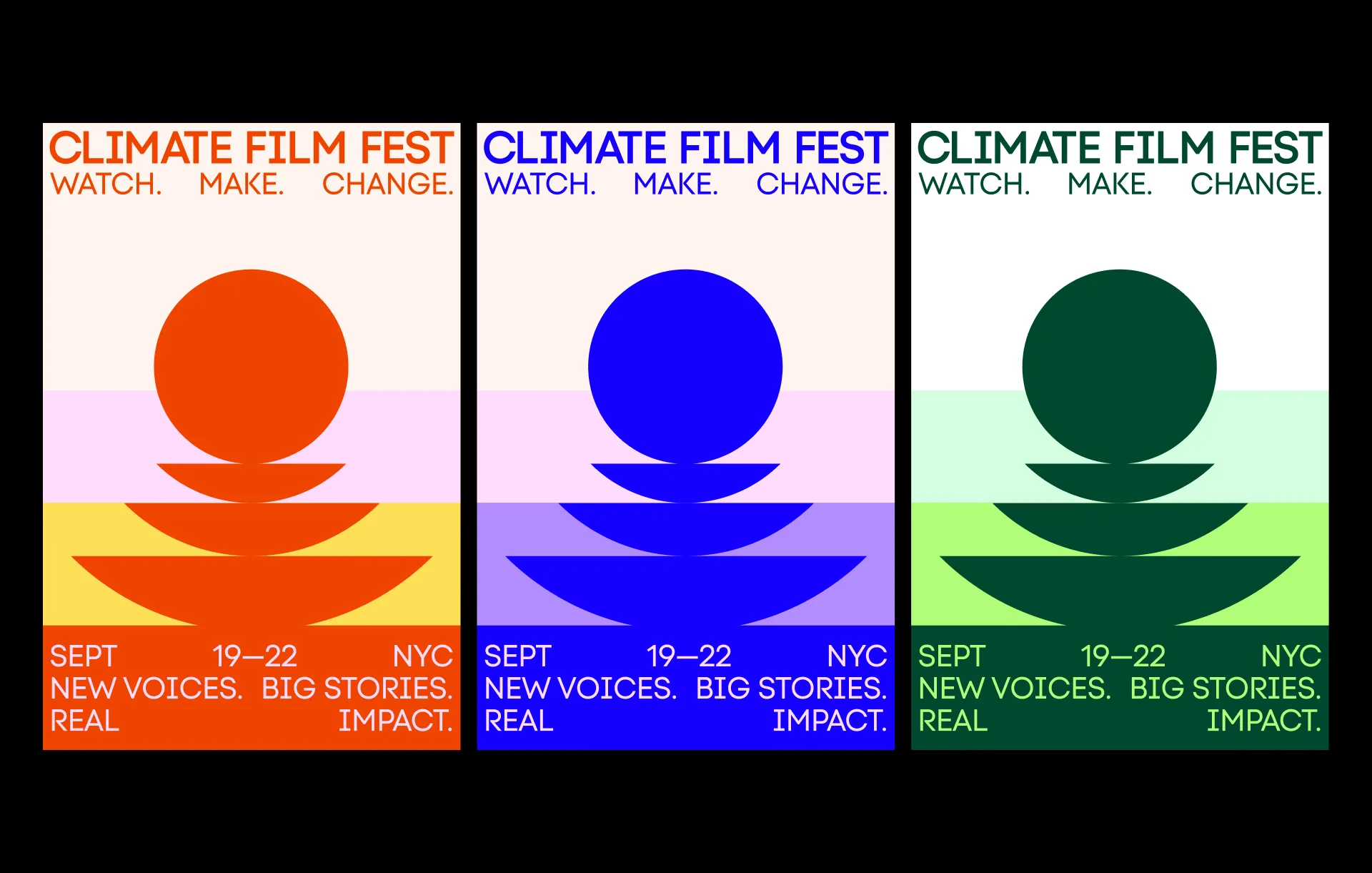
For the inaugural 2024 festival, Studio Rodrigo created a vibrant, kinetic identity that brought the festival to life in theaters across NYC.
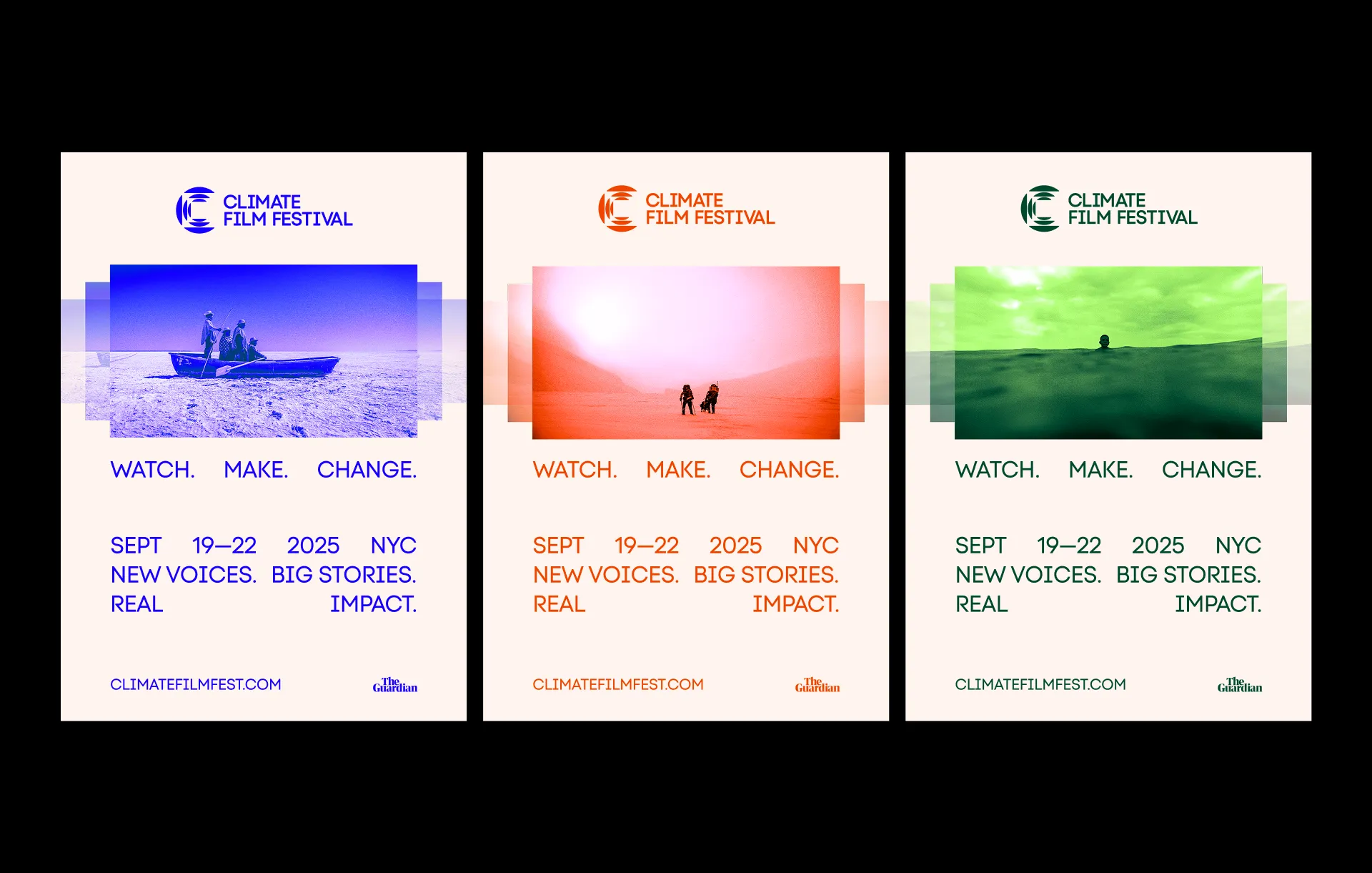
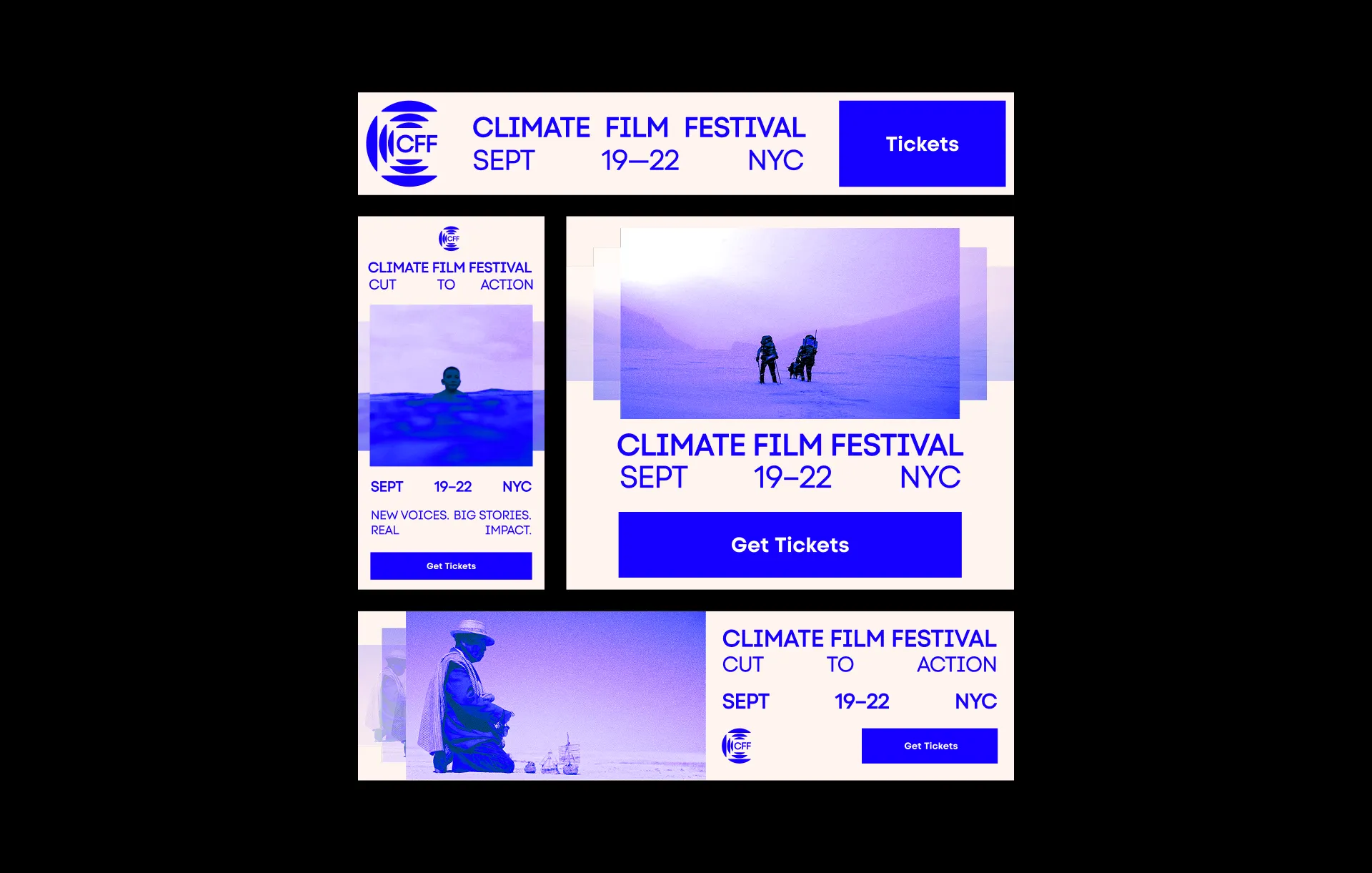
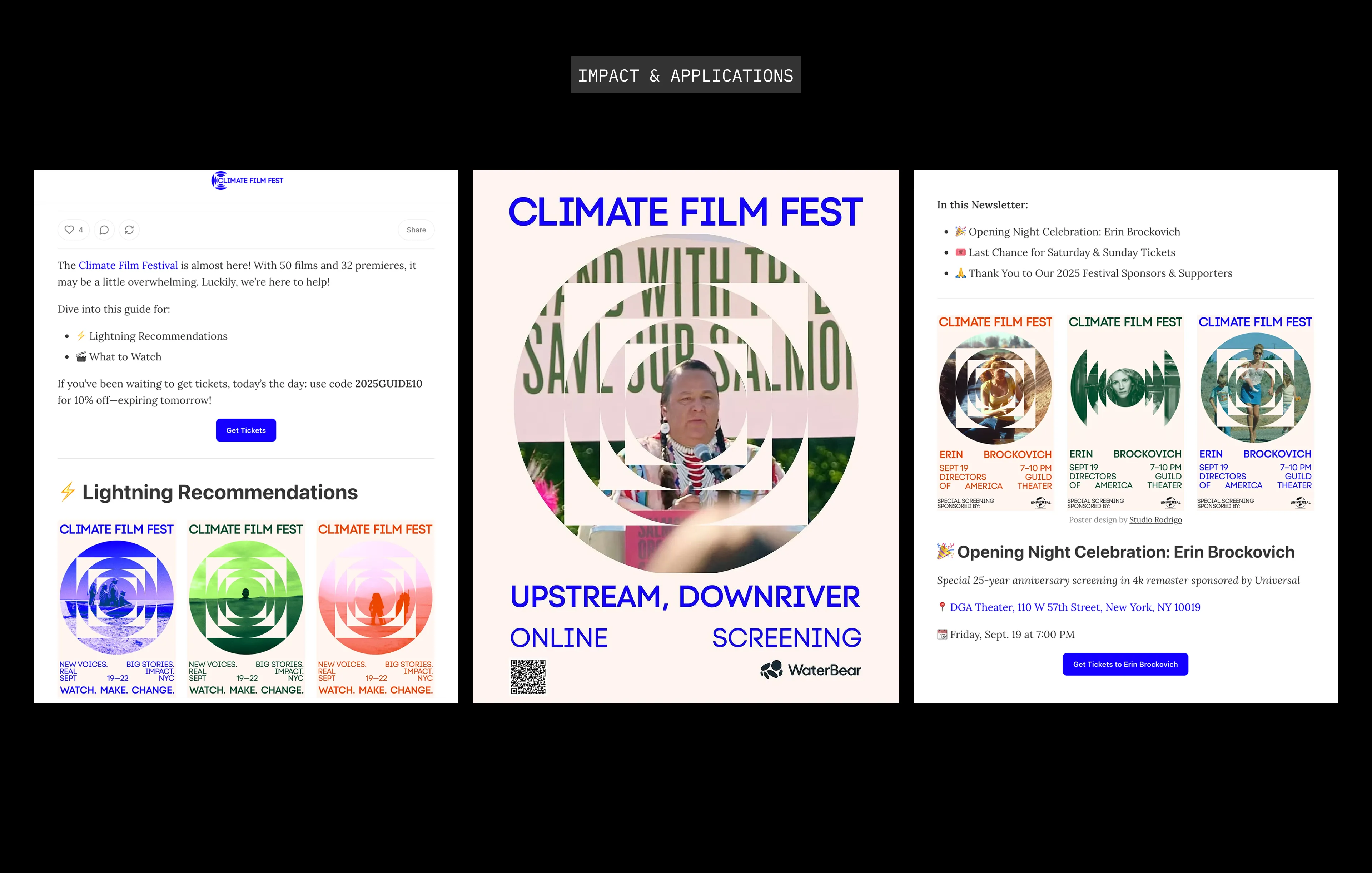
In 2025, I helped refresh CFF's branding to serve the festival in its sophomore year. Working with Design Director Aldo Juraidini Zorrilla, I contributed to the website redesign and a broader brand evolution, synthesizing branding, imagery, and messaging across posters, digital ads, and merchandise to deliver a stronger, more cohesive visual experience.
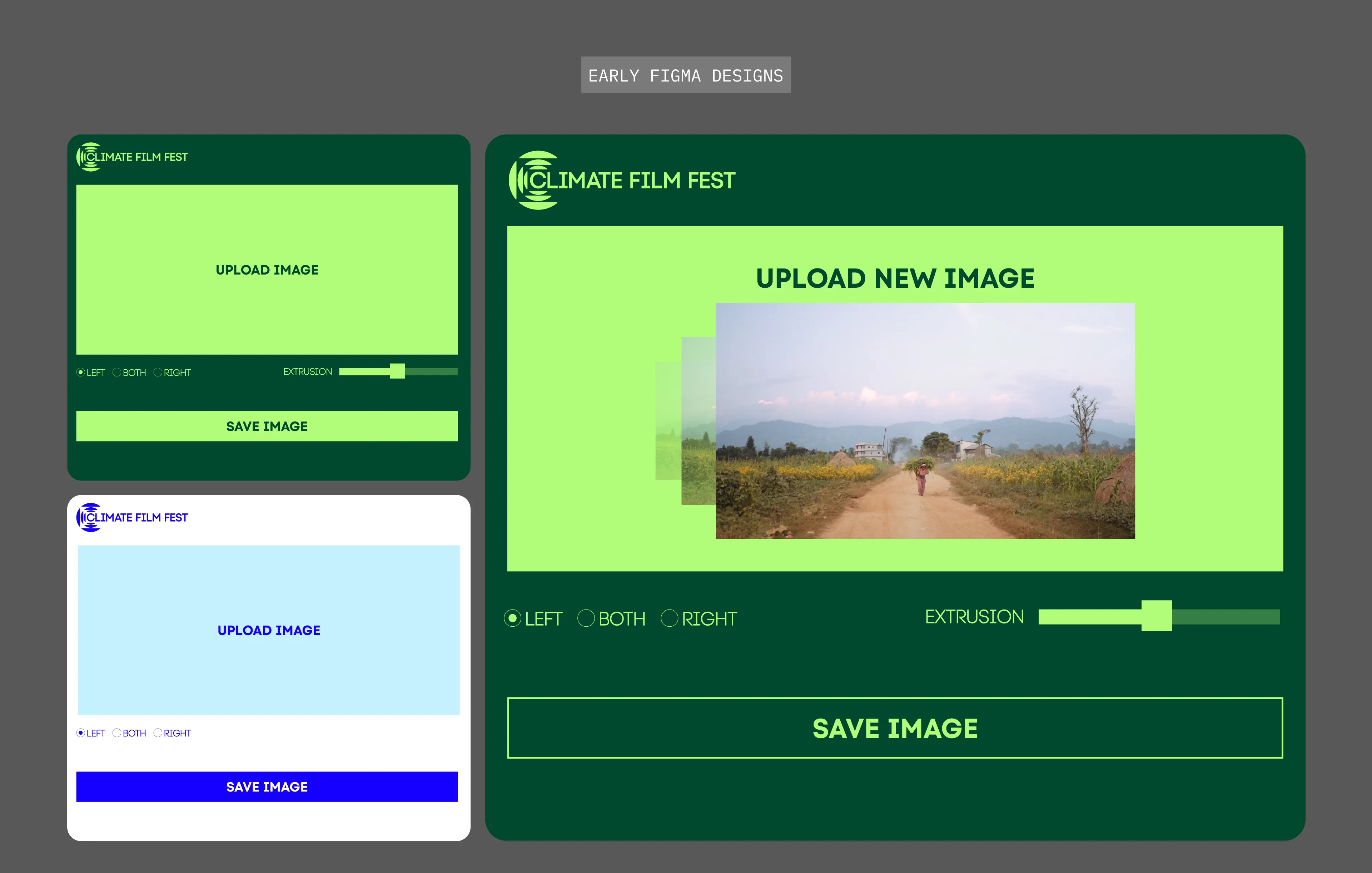
I also developed a custom web tool for design/non-design stakeholders to easily generate CFF's signature image ripple treatment, making the visual system even more scalable and accessible.
During a conversation with Aldo — the design lead — I learned that the client was not inclined to apply the ripple treatment on images because the process felt cumbersome and difficult to keep consistent. As one of CFF's signature visuals, I wanted to make this process effortless by automating it.
I built the final tool in VS Code with Copilot, using HTML and CSS for structure and styling, and JS for logic and interaction. I began with a p5.js prototype to test the tool's logic and Figma mockups to refine the UX.
As I tested prototypes through real design deliverables, I refined the tool over the summer based on what proved most useful in practice. A simple interaction — like clicking and dragging a cropped image to reframe it — was included only after I experienced the need firsthand.
Though outside the scope of my deliverables, this project became a useful study in making a visual system more open without compromising it. The tool was designed not just to make the ripple consistent and simple to apply, but also to nudge stakeholders to make their signature visual more prominent in their design output. Check out the tool here.
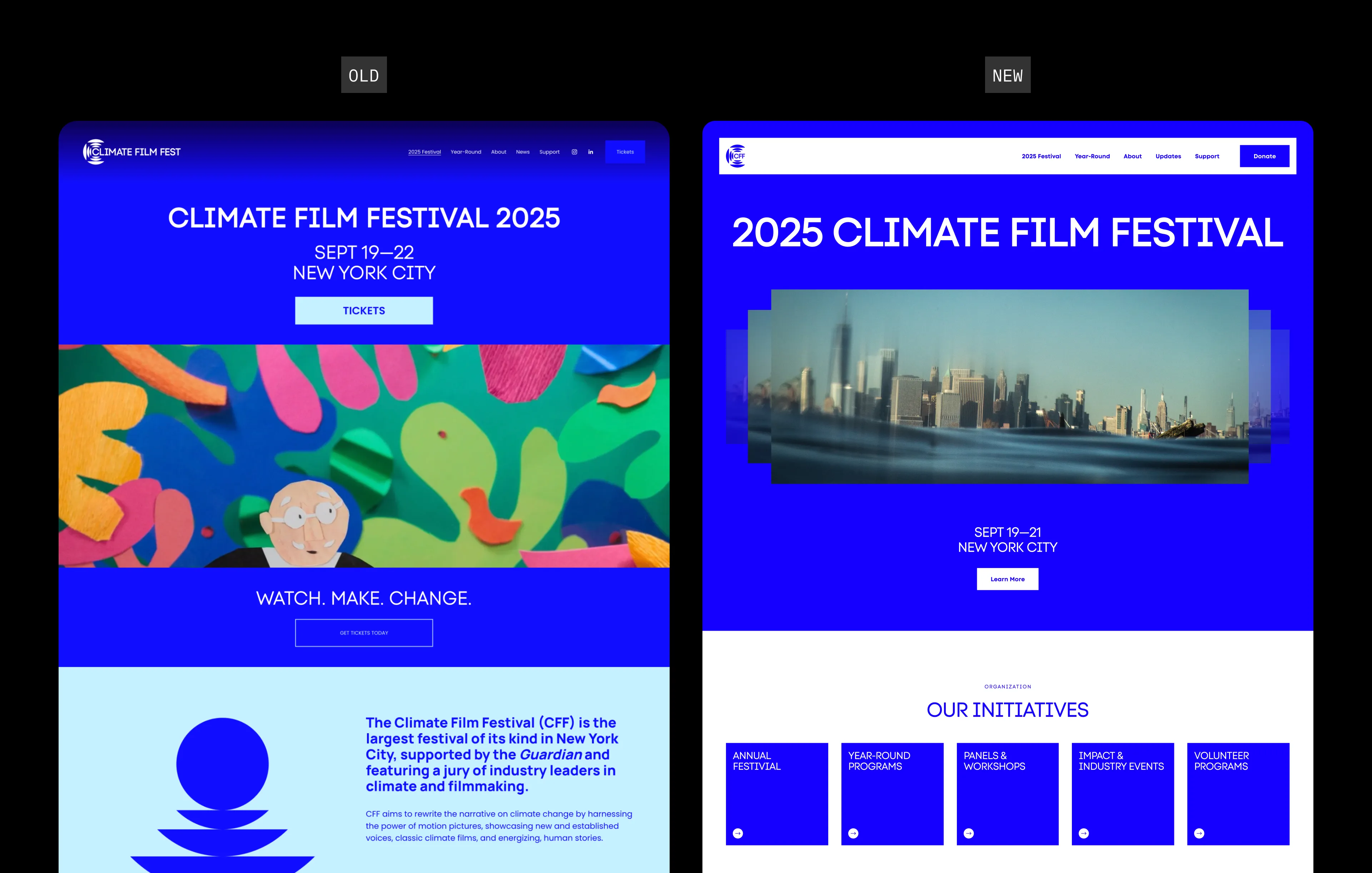
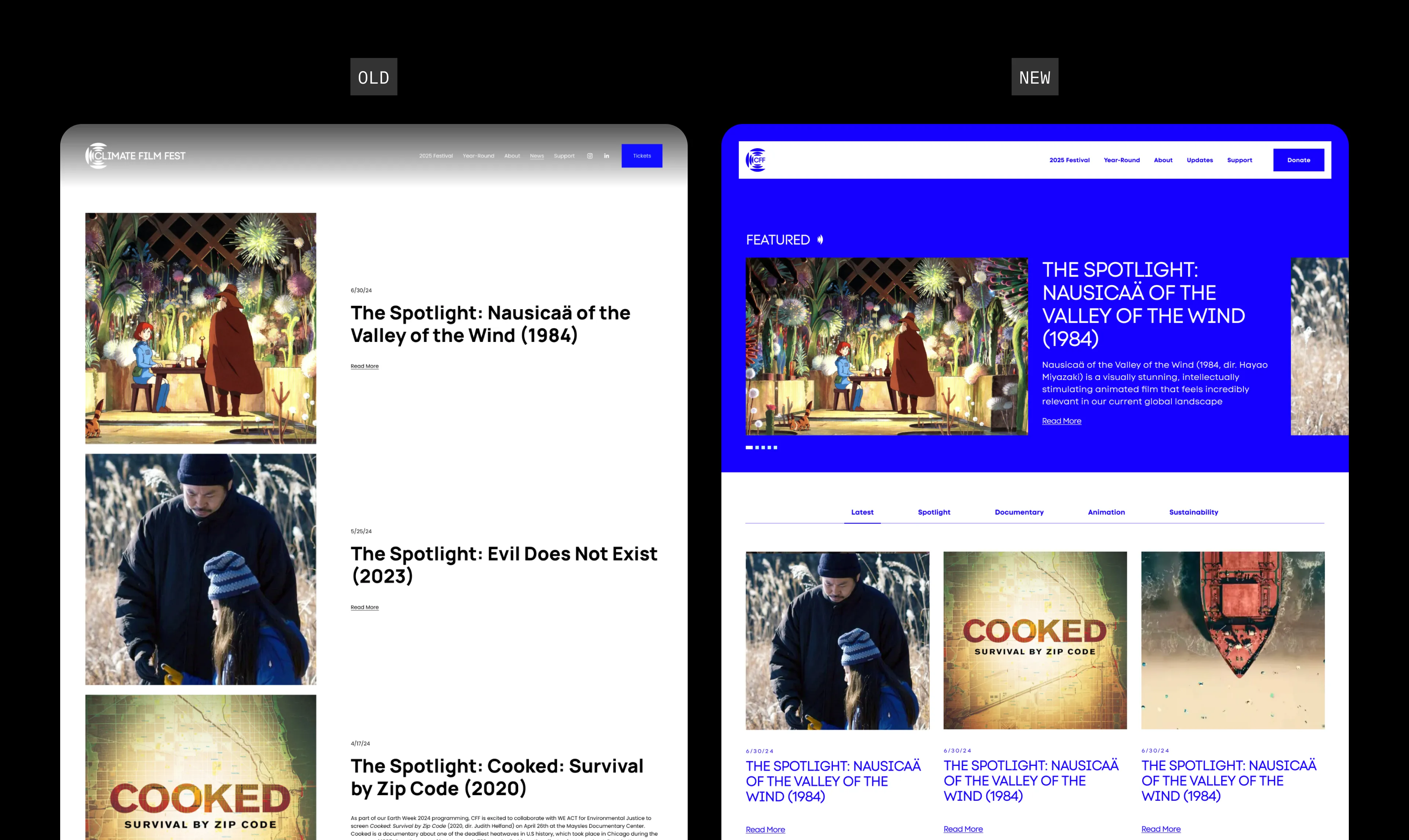
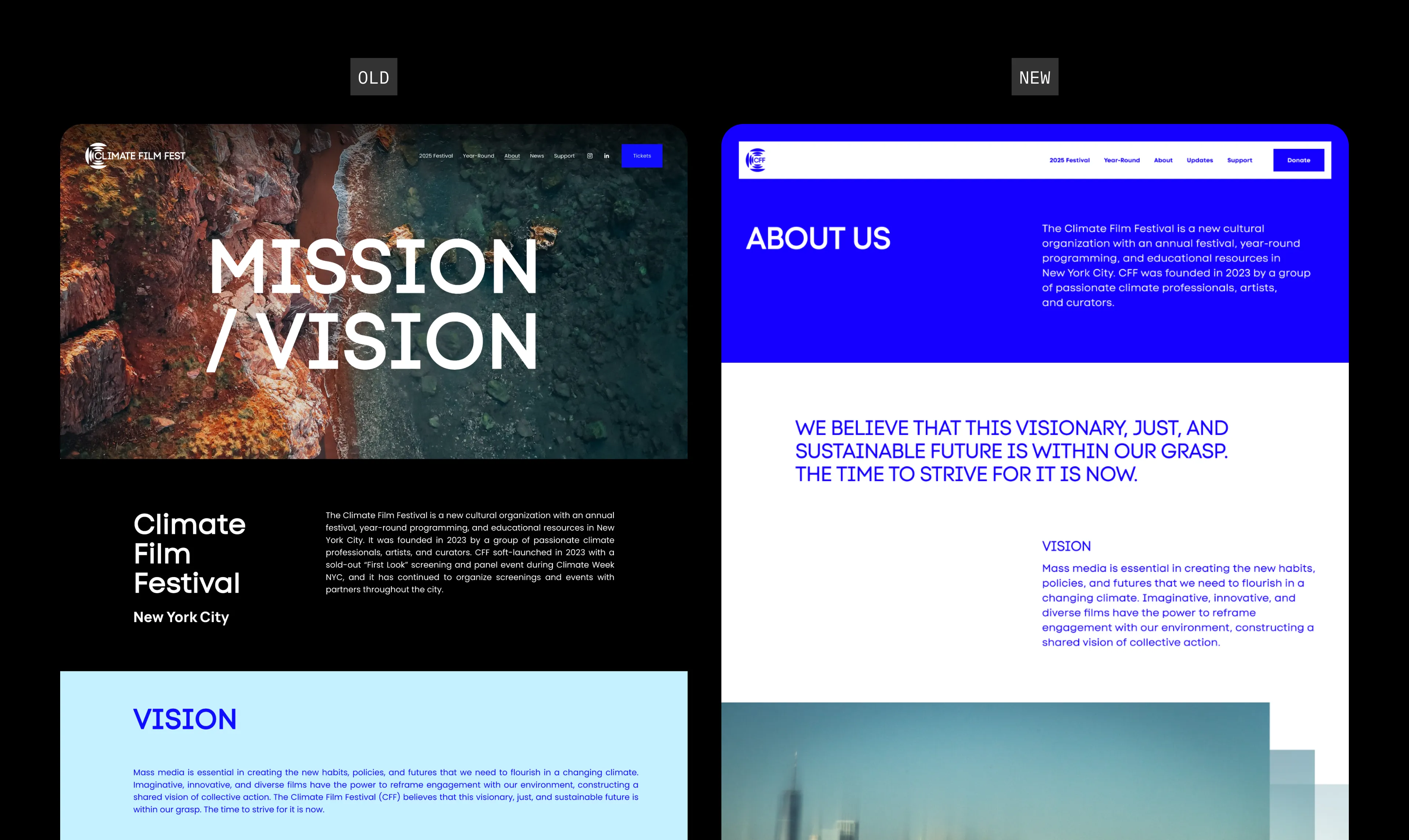
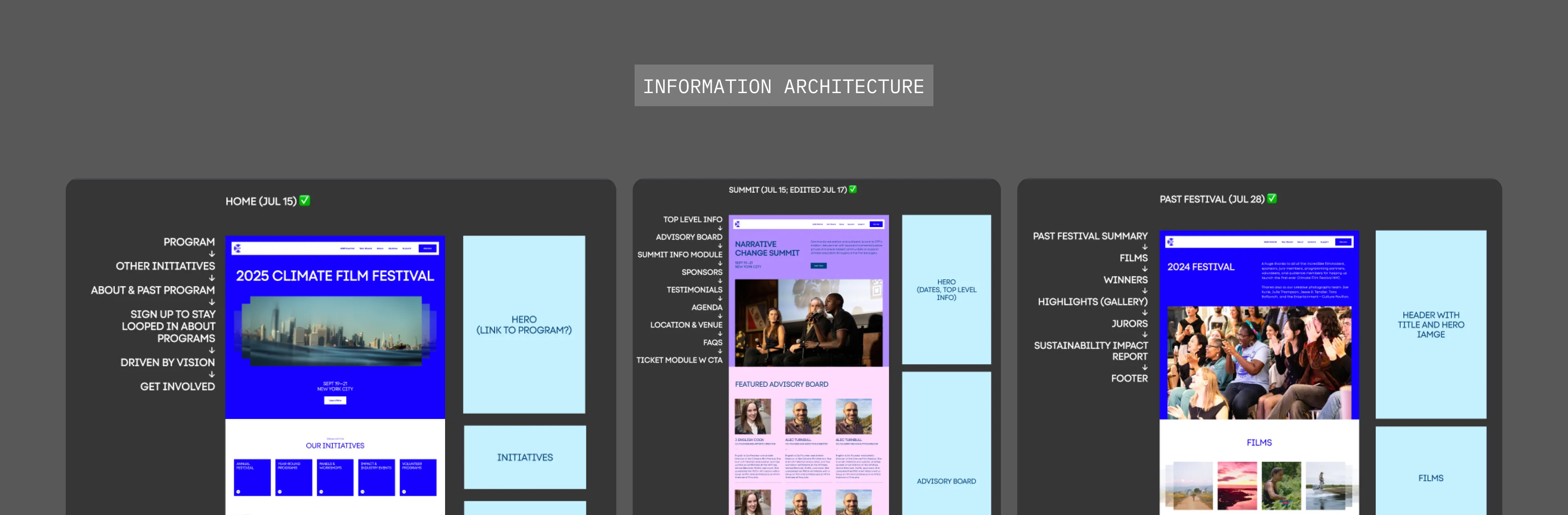
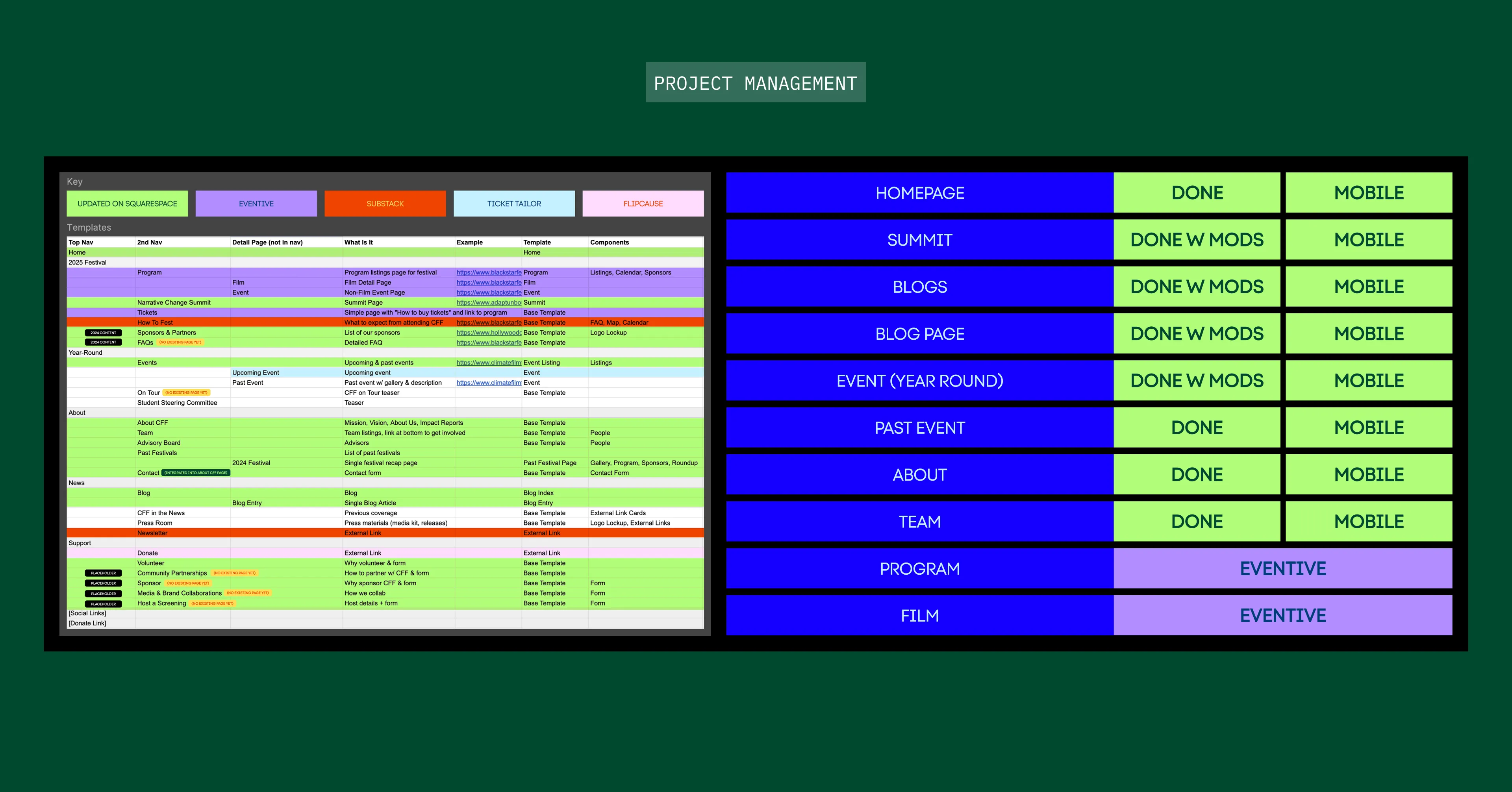
The website redesign was my first touchpoint on this project. While the previous site used the right colors and typefaces, its application was clunky, partly due to the constraints of the client's website builder, Squarespace.
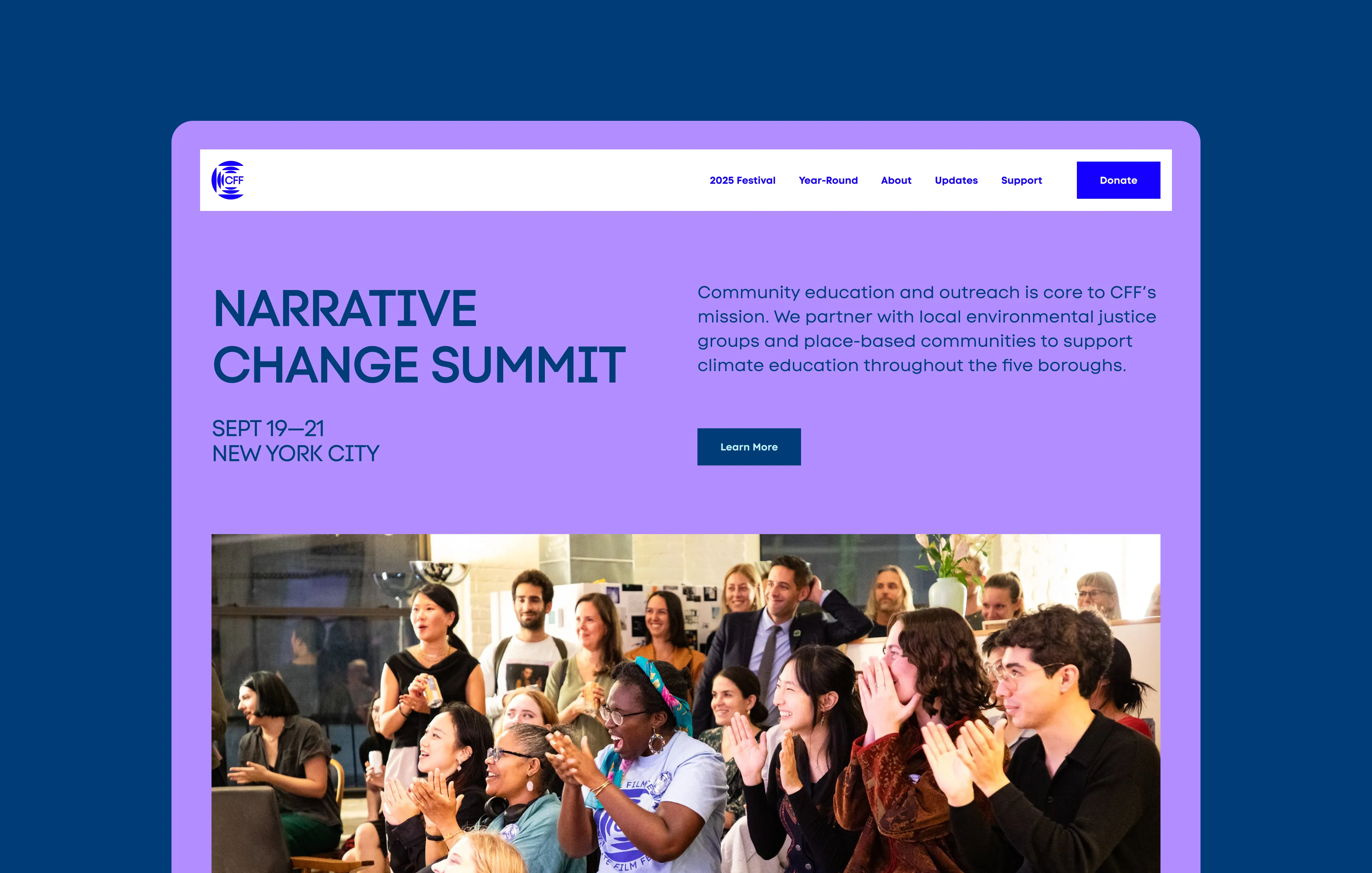
Abandoning the platform was not an option, so a key challenge of this redesign — besides improving the information architecture and layouts — was translating the new Figma designs into a functional Squarespace site. While the website is not live yet, some intensive AI-assisted custom CSS programming resulted in a near perfect 1:1 translation from canvas to platform.
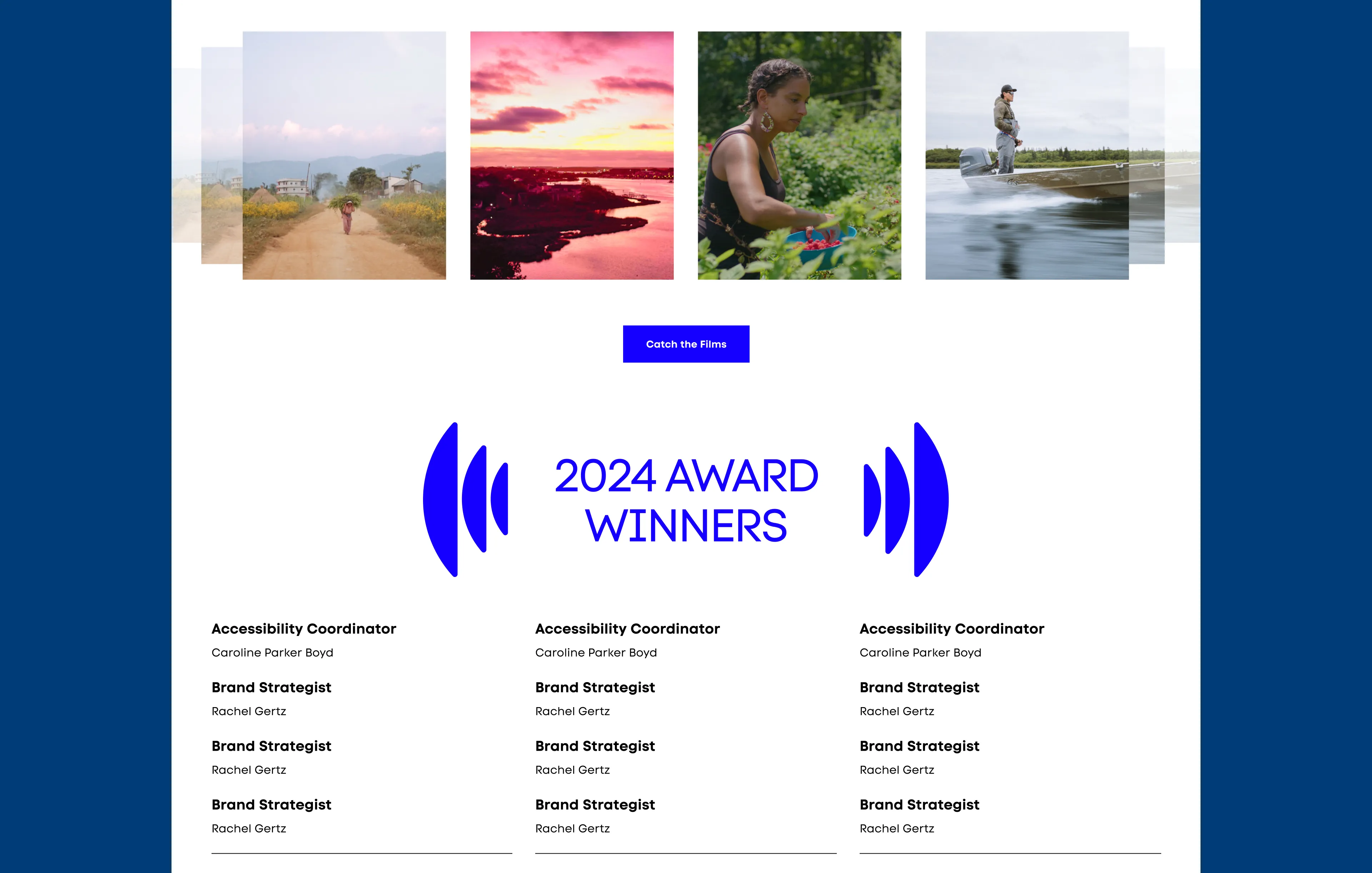
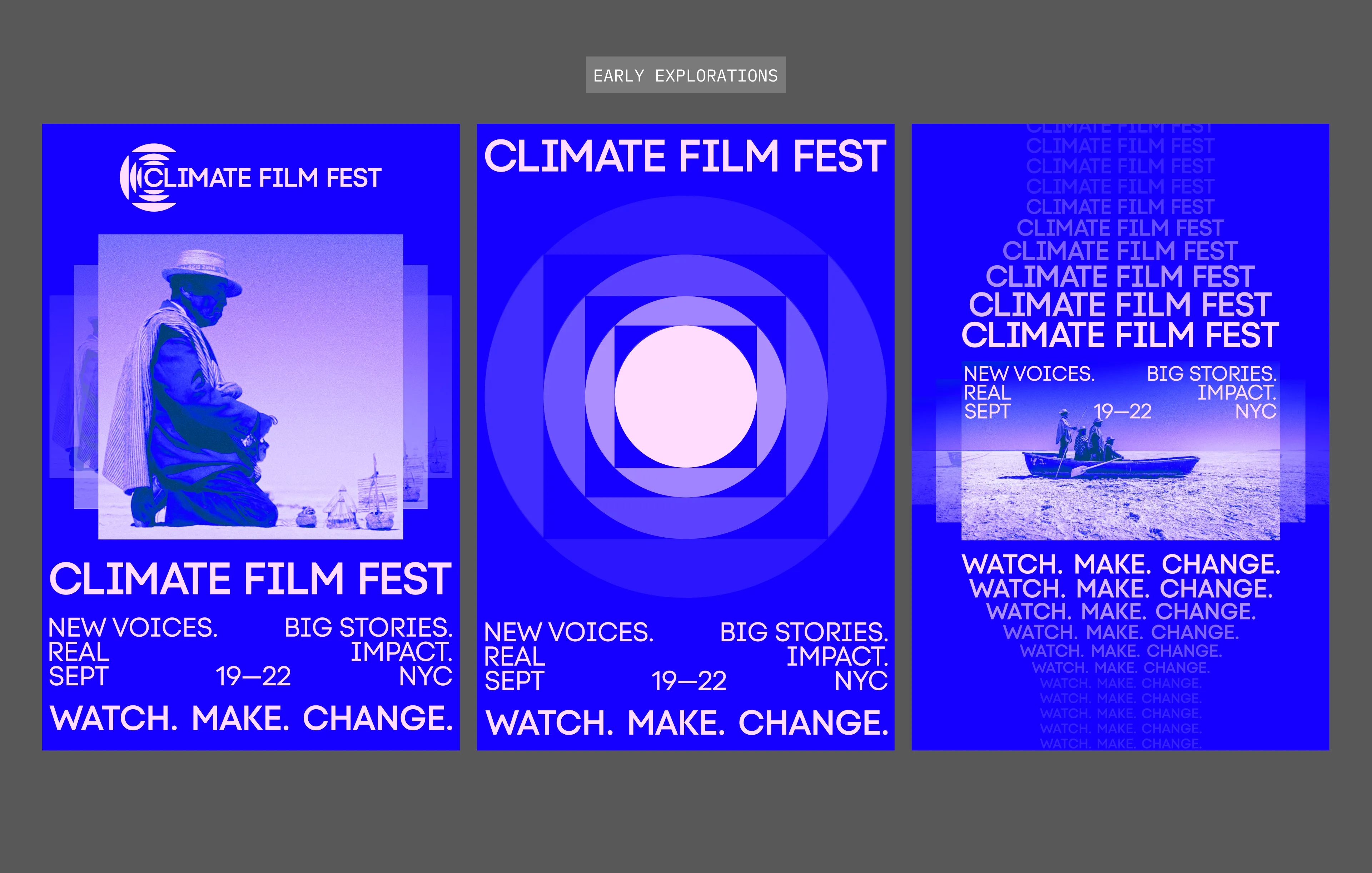
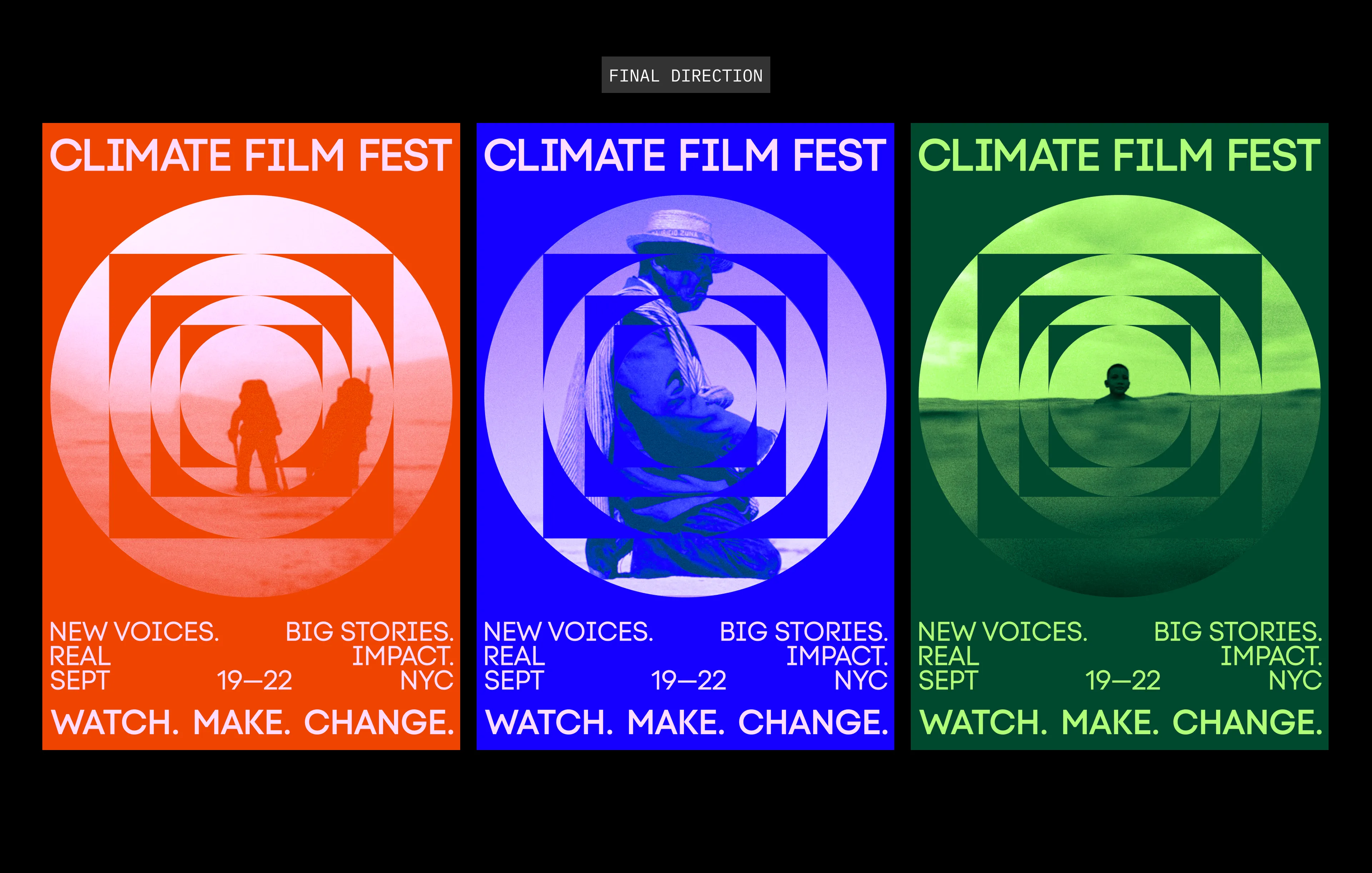
A key opportunity for brand evolution was through print assets. These items bring a sense of tangibility to an organization beyond just the screen. I explored new ways to translate the pulse of the brand without breaking the visual system.
I approached the brand's existing assets as modular components, toying with them to find new patterns that could generate new compositions while staying coherent within the system.
The final application used imagery masked within concentric patterns, framing key visuals and echoing the brand's signature ripple effect.
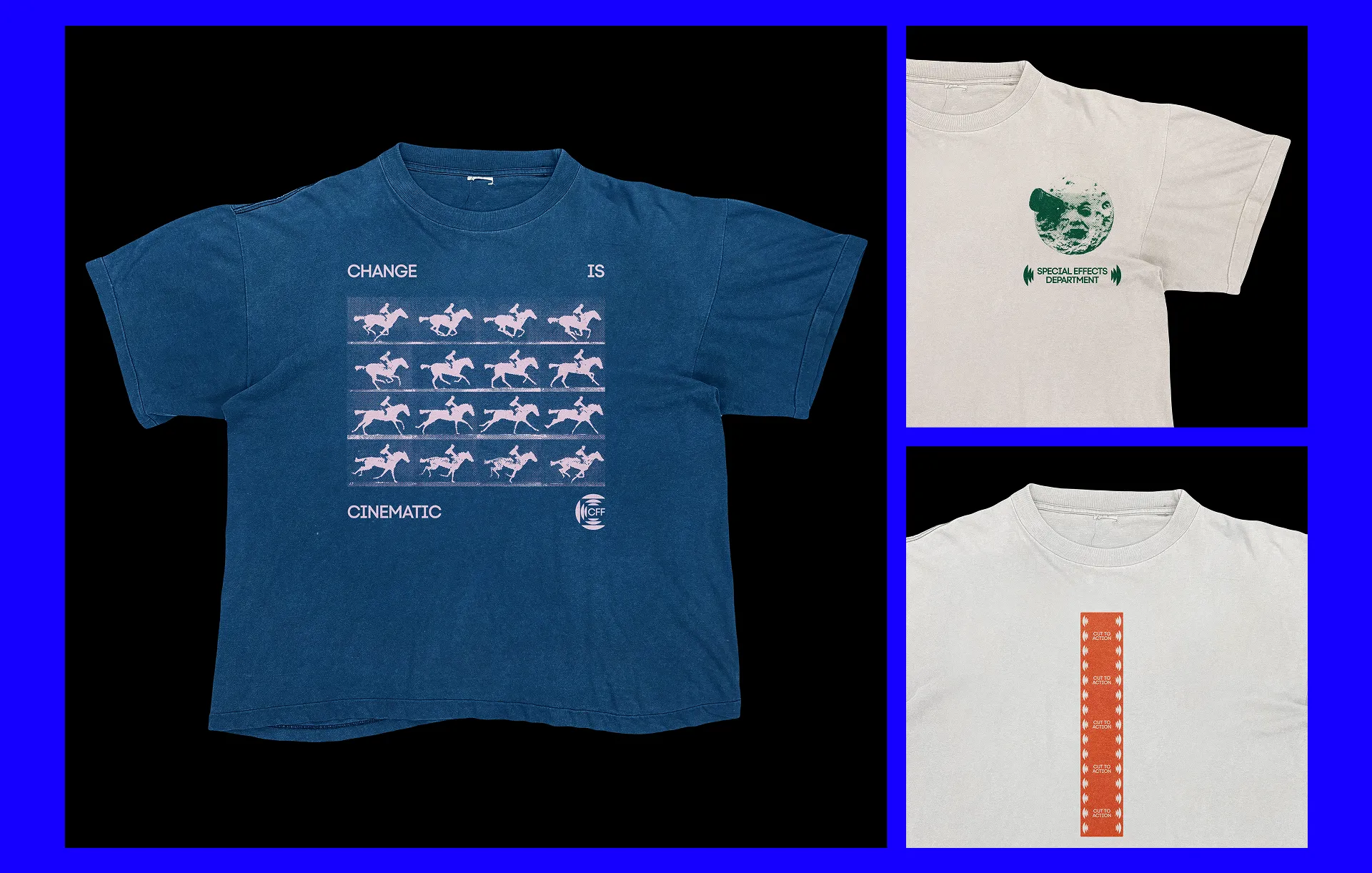
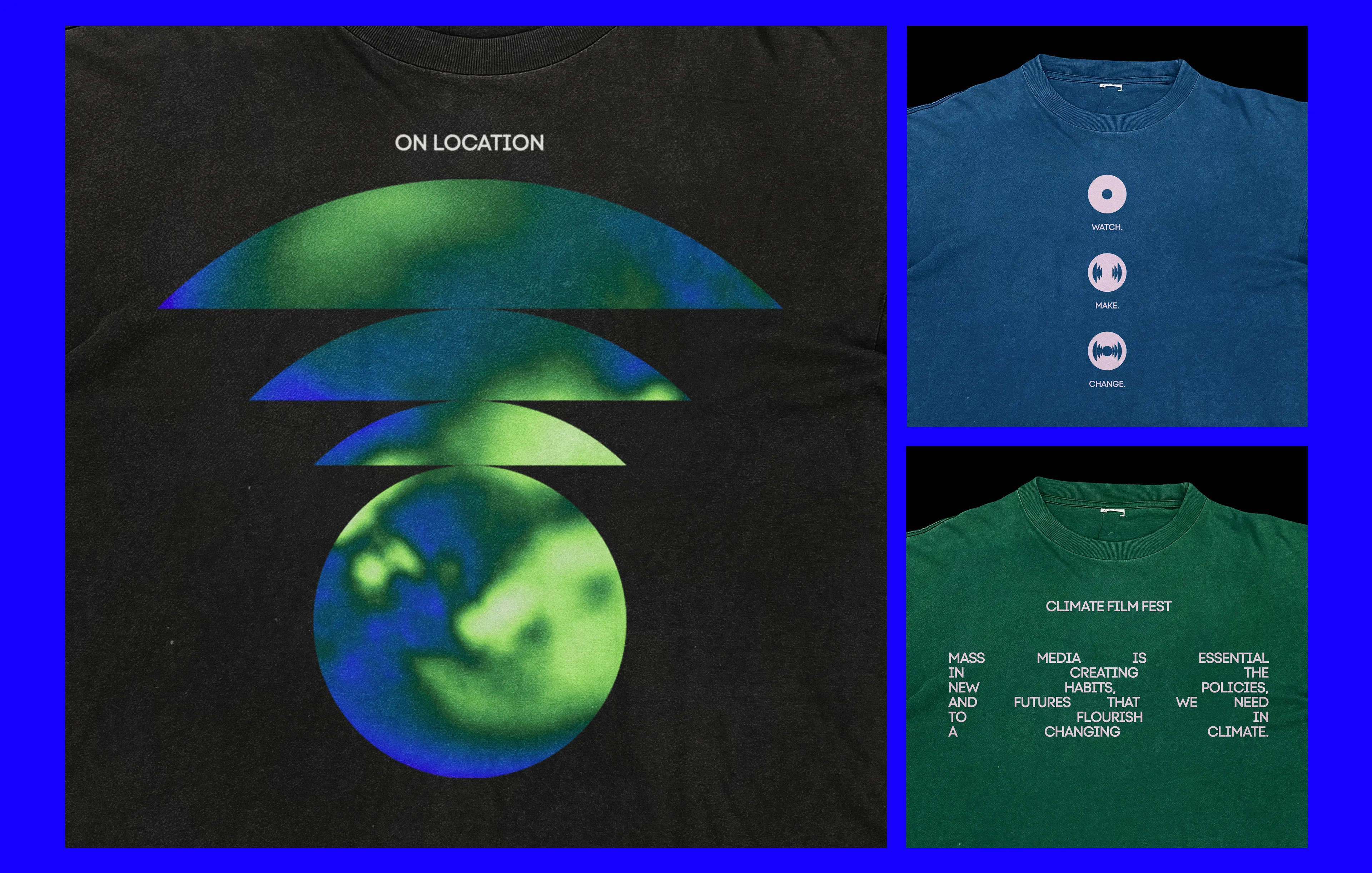
Merch offered a unique opportunity. Last year's goal was to drive awareness to the organization; this year, we wanted to make a statement with personality through both visual and conceptual appeal.
I developed two creative routes using Neilson Norman Group's Tone-of-Voice Scale to guide messaging. After internal rounds of explorations, we opened the final options to a community poll on social media. One of my designs, based on Muybridge's The Horse in Motion, received the most votes and was produced for the 2025 Festival.